
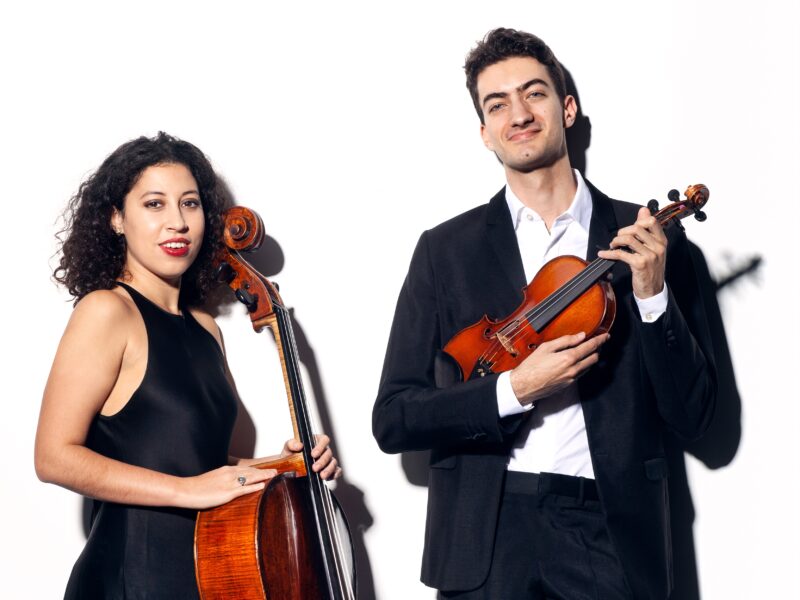
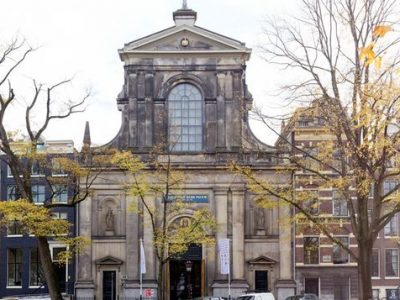
De Klassieke Duif, de concertserie van Ella van Poucke en Stephen Waarts in De Duif, gaat haar vierde seizoen in. Opnieuw kun je genieten van een zorgvuldig samengesteld programma vol prachtige kamermuziek.
//ENGLISH DOWN BELOW//
Programma:
Inleiding gesprek
– korte pauze –
J.S. Bach Goldberg-variaties, BWV 988
(in de bewerking voor strijktrio door Dimitri Sitkovetsky)
De Goldberg variaties, geschreven door Johann Sebastian Bach, behoren zonder twijfel tot zijn grootste meesterwerken.
Het werk opent met de serene Aria, die voor velen vertrouwd zal klinken. Daarop volgen dertig variaties, allemaal gebaseerd op de baslijn en akkoord structuur van de Aria. We horen dansen, canons, afgewisseld met verwijzingen naar destijds populaire Duitse volksmelodieën. Na deze indrukwekkende muzikale reis keert de verstilde Aria terug en sluit zij de cirkel op ontroerende wijze.
Volgens Bachs eerste biograaf, Johann Nikolaus Forkel, componeerde Bach de Goldberg variaties voor graaf Keyserlingk, die aan slapeloosheid leed. De jonge klavecinist Johann Gottlieb Goldberg zou het werk ’s nachts voor hem hebben gespeeld om zijn nachten te verzachten. Hoewel historici tegenwoordig twijfelen aan de juistheid van dit verhaal, blijft het een geliefde anekdote die onlosmakelijk met het werkverbonden is.
Vanavond klinkt de bewerking voor strijktrio van Alexander Sitkovetsky, een arrangement dat inmiddels wereldwijd met groot succes wordt uitgevoerd. De verfijnde driestemmige polyfonie die Bach in veel variaties heeft verweven, leent zich perfect voor deze bezetting. Elke speler geeft een eigen kleur, waardoor de rijkdom van Bachs meerstemmigheid op een bijzondere manier tot leven komt.
Musici:
Stephen Waarts, viool
Diyang Mei, altviool
Ella van Poucke, cello
//ENGLISH//
Johann Sebastian Bach’s Goldberg Variations are widely regarded as one of the greatest masterpieces in the history of music.
The work opens with the serene Aria, a melody that many listeners will recognise. It is followed by thirty variations, all based on the Aria’s bass line and harmonic structure. Along the way, Bach takes us through an extraordinary musical landscape of dances, canons, and references to popular German folk melodies of his time. After this remarkable journey, the tranquil Aria returns, bringing the work to a deeply moving and satisfying close.
According to Bach’s first biographer, Johann Nikolaus Forkel, the Goldberg Variations were composed for Count Keyserlingk, who suffered from insomnia. The young harpsichordist Johann Gottlieb Goldberg is said to have played the work for the Count during sleepless nights to ease his restlessness. Although modern scholars question the historical accuracy of this story, it remains one of the most enduring and beloved anecdotes associated with the work.
This evening, we hear Alexander Sitkovetsky’s acclaimed arrangement for string trio, a version that has earned international recognition and is performed around the world. Much of the music’s brilliance lies in Bach’s intricate three-part polyphony, making the work exceptionally well suited to this instrumentation. Each musician brings a distinct voice and colour to the texture, allowing the richness and clarity of Bach’s counterpoint to emerge in a fresh and compelling way.