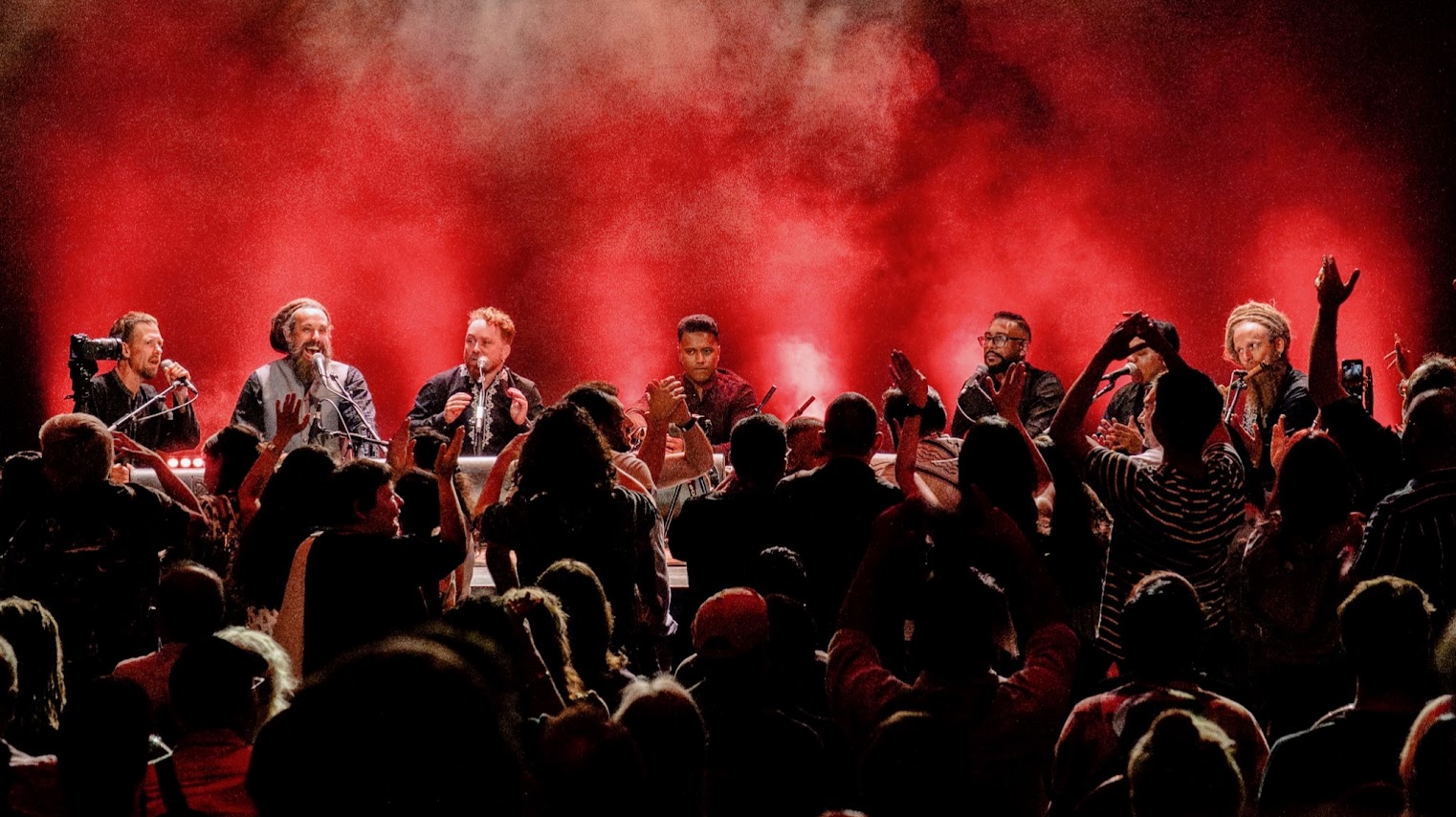
Ervaar een zeldzaam en intens Qawwali-concert van Fanna-Fi-Allah, dat de eeuwenoude Soefi-traditie in haar puurste vorm tot leven brengt.
//ENGLISH BELOW//
In hun 27e jaar van internationale tournees behoort Fanna-Fi-Allah tot de meest toonaangevende traditionele qawwali-ensembles ter wereld. Met duizenden optredens in meer dan 50 landen brengt de groep de eeuwenoude muziek van de soefi-heiligdommen tot leven voor een wereldwijd publiek.
Onder leiding van Tahir Qawwal, begeleid door tabla, harmonium en krachtige samenzang, blijft Fanna-Fi-Allah trouw aan de klassieke qawwali-traditie. Zonder elektronica of fusion staat de muziek volledig in het teken van spirituele verdieping en verbinding.
De poëzie van soefi-heiligen als Amir Khusrau en Baba Farid komt tot leven in meeslepende ritmes, ritmisch handgeklap en steeds hoger opstuwende koorzang. De wervelende soefi-dans van derwisj Aziz versterkt de intense, bijna tranceachtige sfeer.
Geworteld in de soefi-islamitische traditie, maar toegankelijk voor iedereen, overstijgt deze muziek grenzen van taal, cultuur en geloof. Een bezielde muzikale ervaring die mensen samenbrengt in een gedeeld gevoel van eenheid, liefde en devotie.
//ENGLISH//
Now in their 27th year of international touring, Fanna-Fi-Allah is one of the foremost traditional qawwali ensembles in the world. Led by Tahir Qawwal, with tabla, harmonium and choral vocals, the group stays rooted in the classical qawwali tradition, without fusion or electronics. The poetry of Sufi saints such as Amir Khusrau and Baba Farid is carried by driving hand-clap rhythms, soaring chorus lines and deep, trance-like cycles, often joined by the whirling of our dervish Aziz. Music that brings people of every background into one shared space of unity and love.
This is qawwali in its traditional form, which has become rare on the touring stage: long songs carried by voices, harmonium, tabla and clapping hands, with no fusion, no keyboards, guitars or drum kits. The poetry of Sufi saints such as Amir Khusrau and Baba Farid is sung in long, rising cycles that gather the whole room, and a whirling dervish turns as the music peaks. Though born in the Sufi Islamic tradition, this music welcomes everyone, whatever their background, into a shared space of unity and devotion. The ensemble also created the award-winning film series Qawwali: Music of the Mystics.
Tahir Qawwal is trained in voice and harmonium and is an initiated disciple of Ustad Dildar Hussain, tabla player to Ustad Nusrat Fateh Ali Khan for thirty years, and of Ustad Sher Ali Khan. His teachers also include Ustad Rahat Fateh Ali Khan, Pandit Pashupatinath Mishra and Ustad Muazzam Ali Khan. He and the members of the ensemble have trained formally, and continue to train, under these masters in Pakistan, and Ustad Dildar Hussain often tours with the group. They carry the form as it was taught to them.
Seven musicians and a whirling dervish: lead and chorus voices, two harmoniums, tabla, and flute or clarinet. A seated concert with an interval.