Dianto Reed Quintet deelt via DNA, persoonlijke verhalen en muziek van over de hele wereld laat zien dat grenzen minder vast zijn dan we denken.
//ENGLISH BELOW//
Door de geschiedenis heen hebben mensen over de hele wereld gereisd, zich op nieuwe plekken gevestigd en zo een voortdurend veranderend verhaal van migratie, conflict en samenleven gevormd. In zekere zin staat dit verhaal geschreven in ons DNA — het erfelijke materiaal dat ons verbindt met onze voorouders.
DNA kent geen grenzen, talen of religies. Van nature voelen we ons verbonden met de plek en cultuur waarin we zijn opgegroeid, maar ons DNA vertelt een veel breder verhaal. Het verbindt ons met mensen en plekken over de hele wereld.
Muziek vertelt een vergelijkbaar verhaal. Eeuwenlang hebben melodieën, ritmes en muzikale ideeën zich over landen en continenten verspreid, waarbij ze onderweg veranderden en nieuwe vormen aannamen. Grenzen zijn vaak veel minder vast dan we denken.
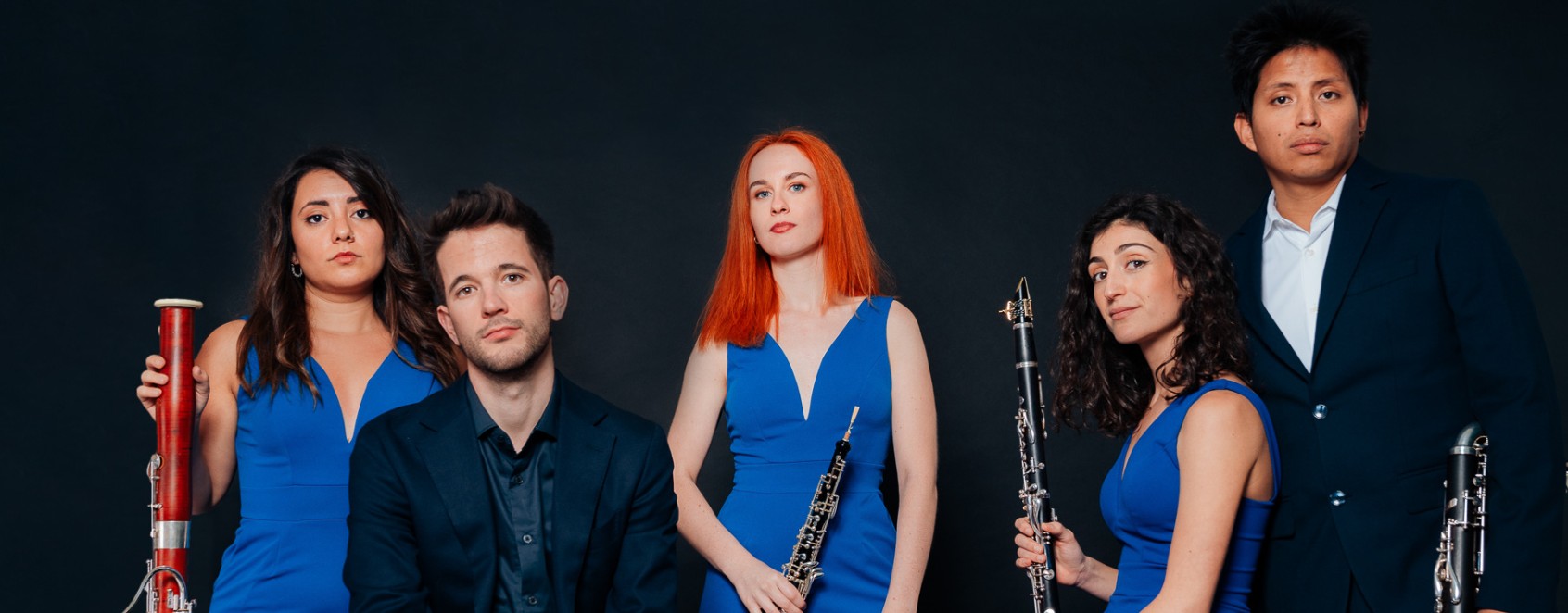
Voor dit project lieten de vijf musici van het Dianto Reed Quintet DNA-tests uitvoeren om hun afkomst te onderzoeken. De resultaten leverden verrassende ontdekkingen op. Hoewel het kwintet voornamelijk uit Spaanse musici bestaat, met één lid uit Zuid-Amerika, blijken hun wortels zich uit te strekken van Griekenland tot Scandinavië en van Mexico tot de Balkan.
Het programma combineert nieuw gecomponeerde werken van Ramin Amin (Iran) en Fuensanta (Mexico) met traditionele, klassieke en volksmuziek. Ook klinkt de gaita, de traditionele Galicische doedelzak, bespeeld door fagottist María, die tijdens de voorstelling ook zingt.
Naast de muziek hoort het publiek opgenomen getuigenissen van mensen die migratie zelf hebben ervaren, onder wie de twee componisten. Zij vertellen over de vele redenen waarom mensen hun thuis verlaten: oorlog, honger, liefde, werk, studie, ideologie, seksualiteit en de zoektocht naar een nieuw bestaan.
Migratie kan gepaard gaan met verlies en verlangen, maar ook met hoop, vernieuwing en nieuwe mogelijkheden. Het is onderdeel van wat de mensheid heeft gevormd — en van wat ons maakt tot wie we zijn.
Deze voorstelling viert de diversiteit in ons DNA en de verbindingen die tussen ons bestaan: een ode aan migratie, muziek en het idee dat we allemaal wereldburgers zijn.
//ENGLISH//
Throughout history, people have travelled across the world, settling in new places and creating a constantly changing story of migration, conflict and coexistence. In a way, this story is written in our DNA — the hereditary material that connects us to our ancestors. DNA knows no borders, languages or religions. We naturally feel connected to the place and culture where we grew up, but our DNA tells a wider story, linking us to people and places all over the world. Music tells a similar story. For centuries, melodies, rhythms and musical ideas have travelled across countries and continents, changing and taking new forms along the way. Borders are often
much less fixed than we imagine. For this project, the five musicians of Dianto Reed Quintet took DNA tests to explore their ancestry. The results were full of surprises. Although the quintet is predominantly Spanish, with one member from South America, their roots stretch from Greece to Scandinavia and from Mexico to the Balkans.
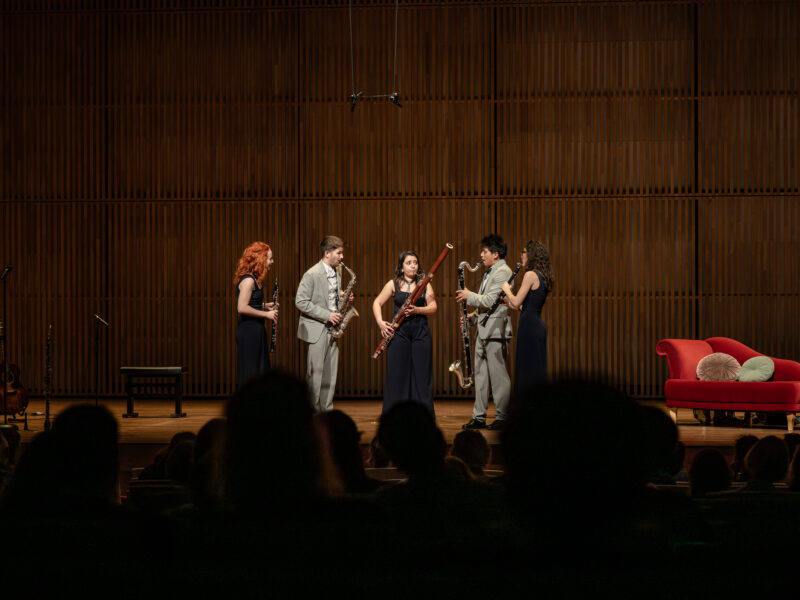
The programme combines newly commissioned works by Ramin Amin (Iran) and Fuensanta (Mexico) with traditional, classical and folk music. It also features the gaita, the traditional Galician bagpipe, played by our bassoonist María, who also sings. Alongside the music, audiences will hear recorded testimonies from people who have
experienced migration, including the two composers. They reflect on the many reasons people move: war, hunger, love, work, study, ideology, sexuality and the search for a new life. Migration can bring loss and longing, but also hope, renewal and new possibilities. It is part of what has shaped humanity — and part of what makes us who we are. This performance celebrates the diversity within our DNA and the connections that exist between us: a tribute to migration, music and the idea that we are all citizens of the world.
Music program:
– Jean Sibelius (1865-1957). Finlandia, Op.26. Arr. Max Knigge.
– Helen Hopekirk (1856-1945). Romance in A minor. Arr. Raaf Hekkema.
– Ramin Amin Tafreshi (1992). Echoes of the Buried Lullaby (2025).
– Traditional. Freilich. Arr. Max Knigge.
– Antonio Vivaldi (1678-1741). Concerto “La Notte”. Arr. Hugo Bouma. .Allegro
– Ghaeth Almaghoot (1993). Klmlik. Arr. van Max Knigge. (Special guest performing: Ghaeth Almaghoot).
– Rodolfo Halffter (1900-1987). 8 Tientos. Arr. Michele Mazzini.
.V
.VII
– Lili Boulanger (1893-1918). Nocturne. Arr. Annemarie Hensens.
– Fuensanta (1995). Patronas (2025).
.La Bestia
.Los Viajeros
.Las Patronas
– Nikos Skalkottas (1904-1949). 4 Greek Dances. Arr Dimitris Andrikopoulos.
.Peloponnisiakos
.Kleftikos
– Avelino Cachafeiro (1899-1972). Muiñeira de Chantada. Arr. Max Knigge.
Team:
Concept and scenography – Dianto Reed Quintet
Performers — Dianto Reed Quintet
María González Bullón – oboe, English horn, guitar
Ovidi Martí Garasa – saxophone
María Losada Burgo – bassoon, voice, bagpipes
Erick Steven Rojas Toapanta – bass clarinet
María Luisa Olmos Ros – clarinet
Theater final director (Eindregie) – Wieger Meulenbroek
Voiceover (by order of appearance)
Ella Tempel
Erick Steven Rojas Toapanta
Ghaeth Almaghoot
Fuensanta
Photo credits: Maarten Mooijman